Stage 1
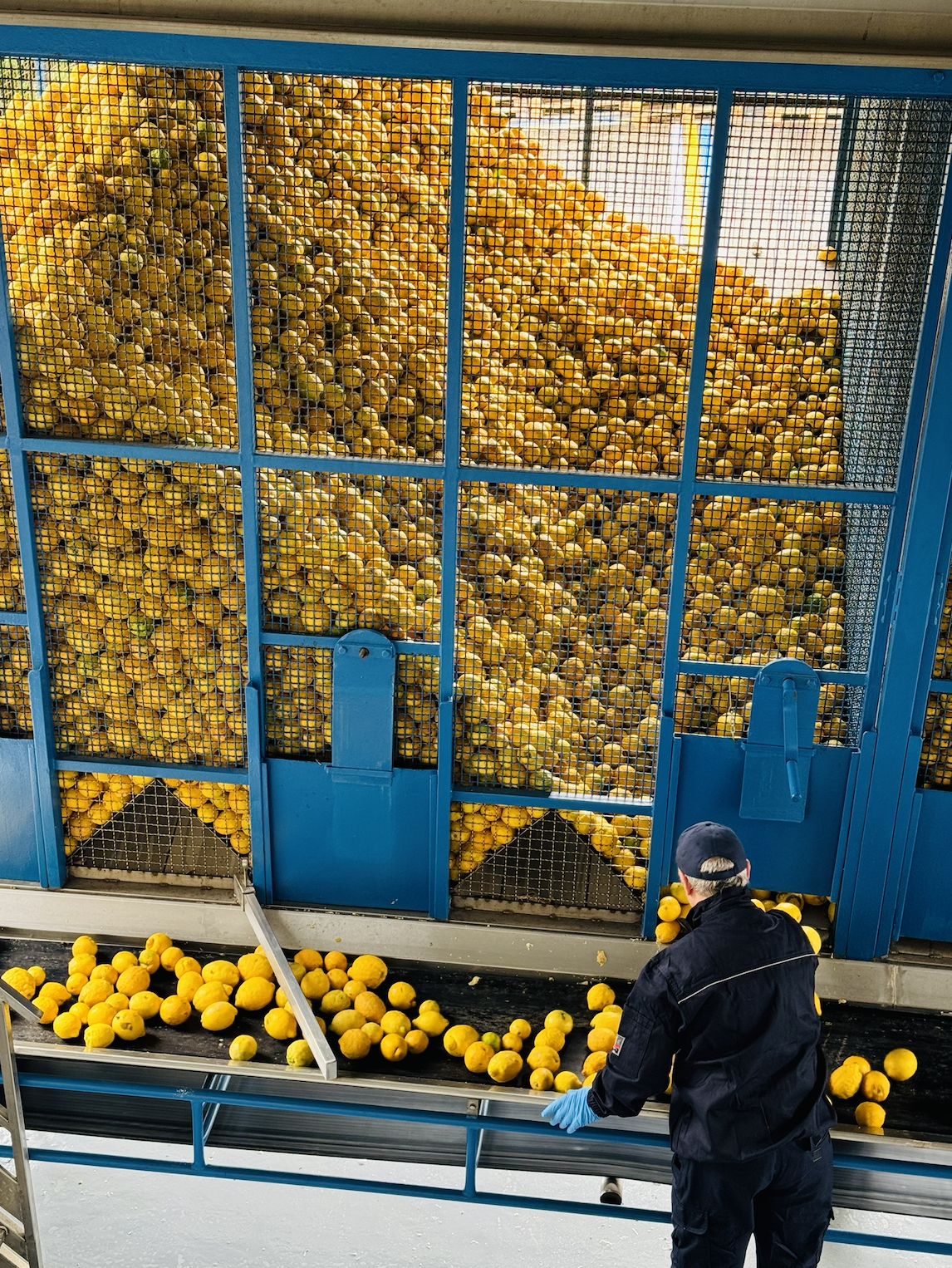
Fruit Reception
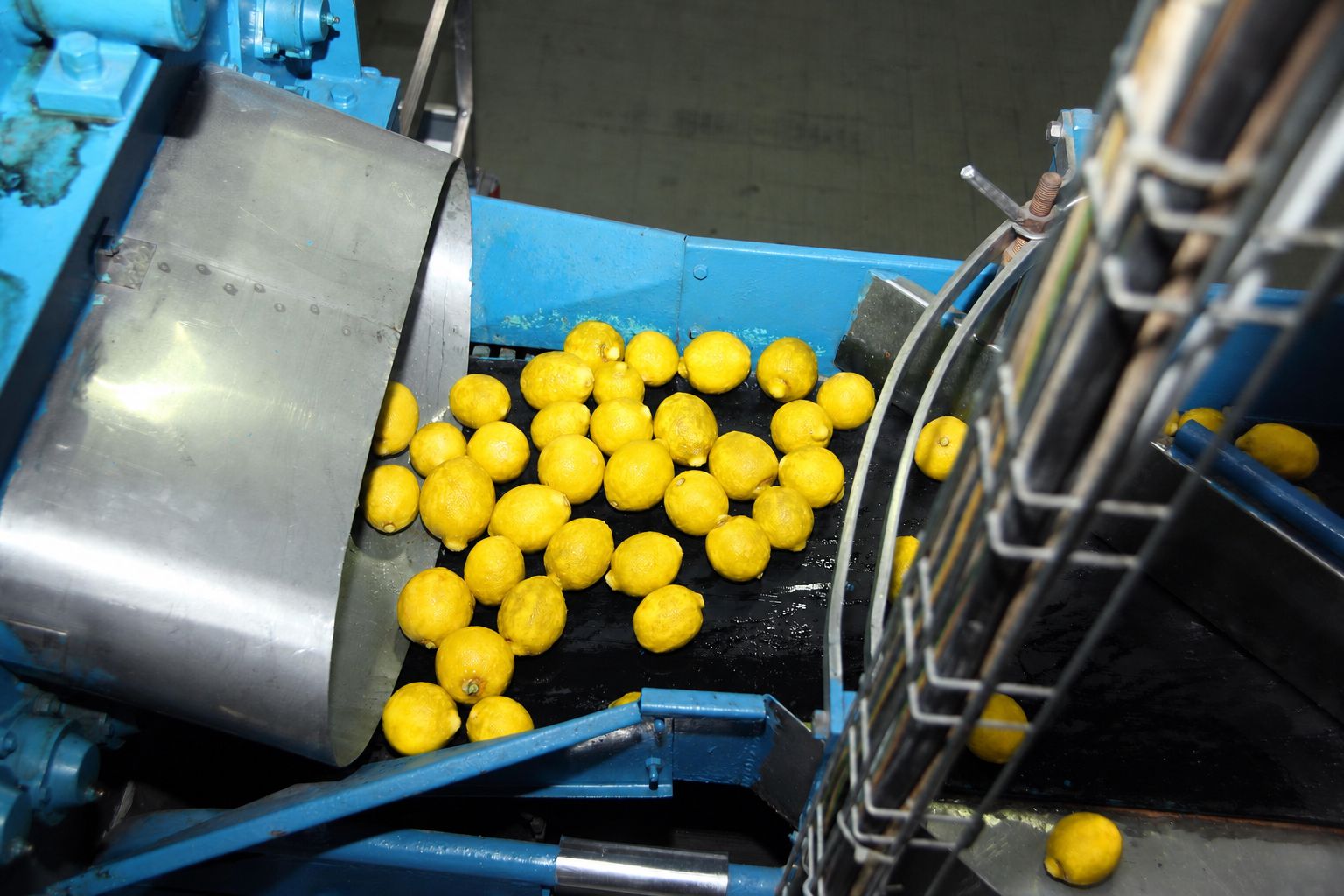
The fruit arrives at the Messina factory and is received under controlled conditions before it enters the line.
Starting with sound, fully traceable fruit is the foundation of juice quality, aroma, and food safety.

From the Messina factory, every lot is received, refined, and packed under laboratory control.
Crystal clear · Not from concentrate
Single-strength juice is pasteurised before vacuum pulp filtration and ultrafiltration, then heat-treated and packed without concentration.
Parallel stream
Crystal clear · Concentrate
Clear juice is pasteurised before vacuum filtration, concentrated on a five-stage falling-film condenser, then heat-treated before chilled filling.
Parallel stream
Cloudy · Not from concentrate
Single-strength juice keeps its natural cloud. Pulp is refined by centrifuge rather than ultrafiltration, with no concentration step.
Parallel stream
Cloudy · Concentrate
Cloudy juice is pasteurised and centrifuged, then concentrated on the five-stage condenser and flash-cooled before a final heat treatment and filling.
Parallel stream
Stage 1
The fruit arrives at the Messina factory and is received under controlled conditions before it enters the line.
Starting with sound, fully traceable fruit is the foundation of juice quality, aroma, and food safety.
Stage 2
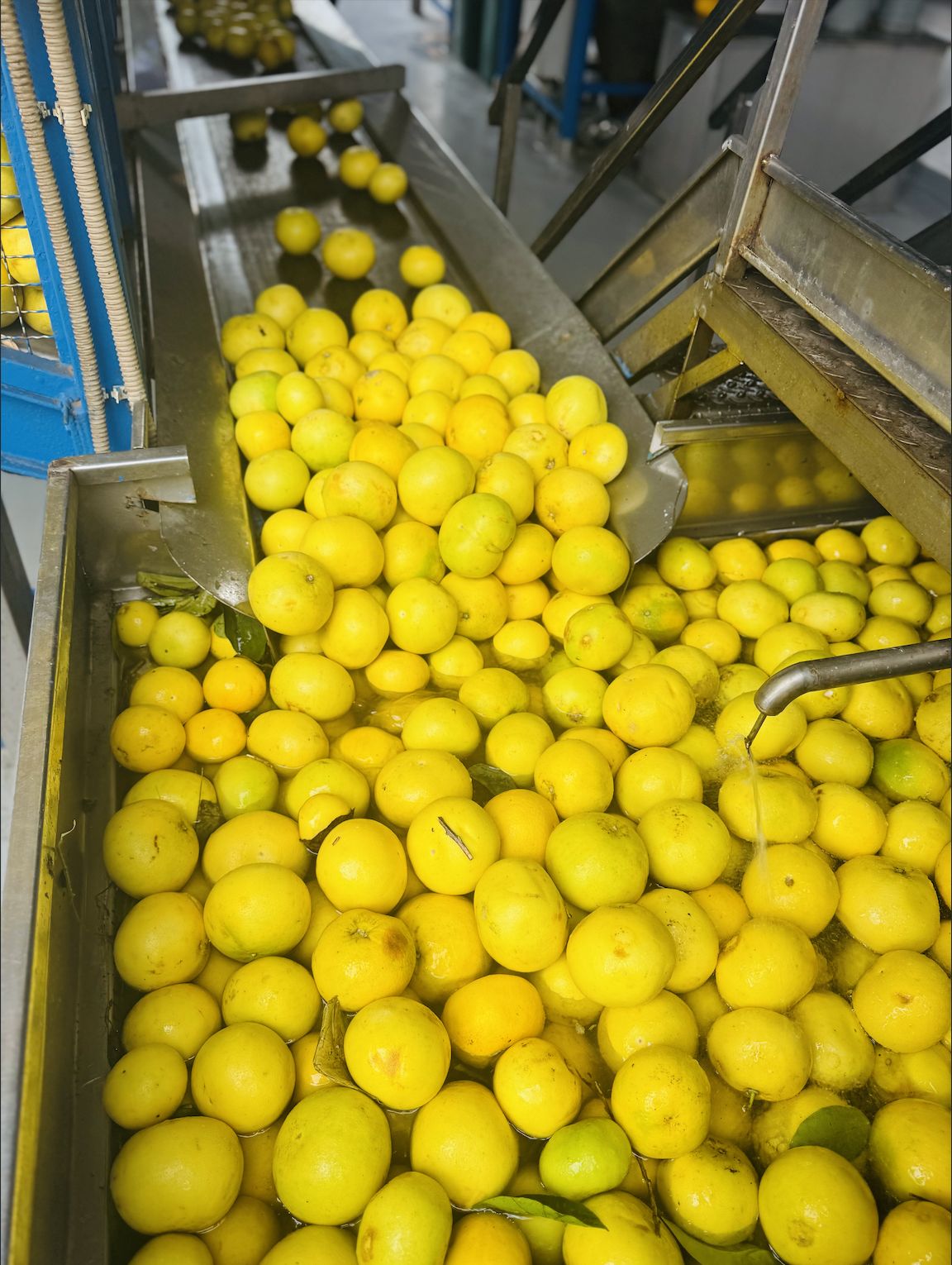
Fruit is conveyed through a washing stage that removes soil, dust, and surface residues in a controlled water bath before peeling.
A clean fruit surface protects downstream equipment and keeps peel oils and juice free from external contamination.
Stage 3
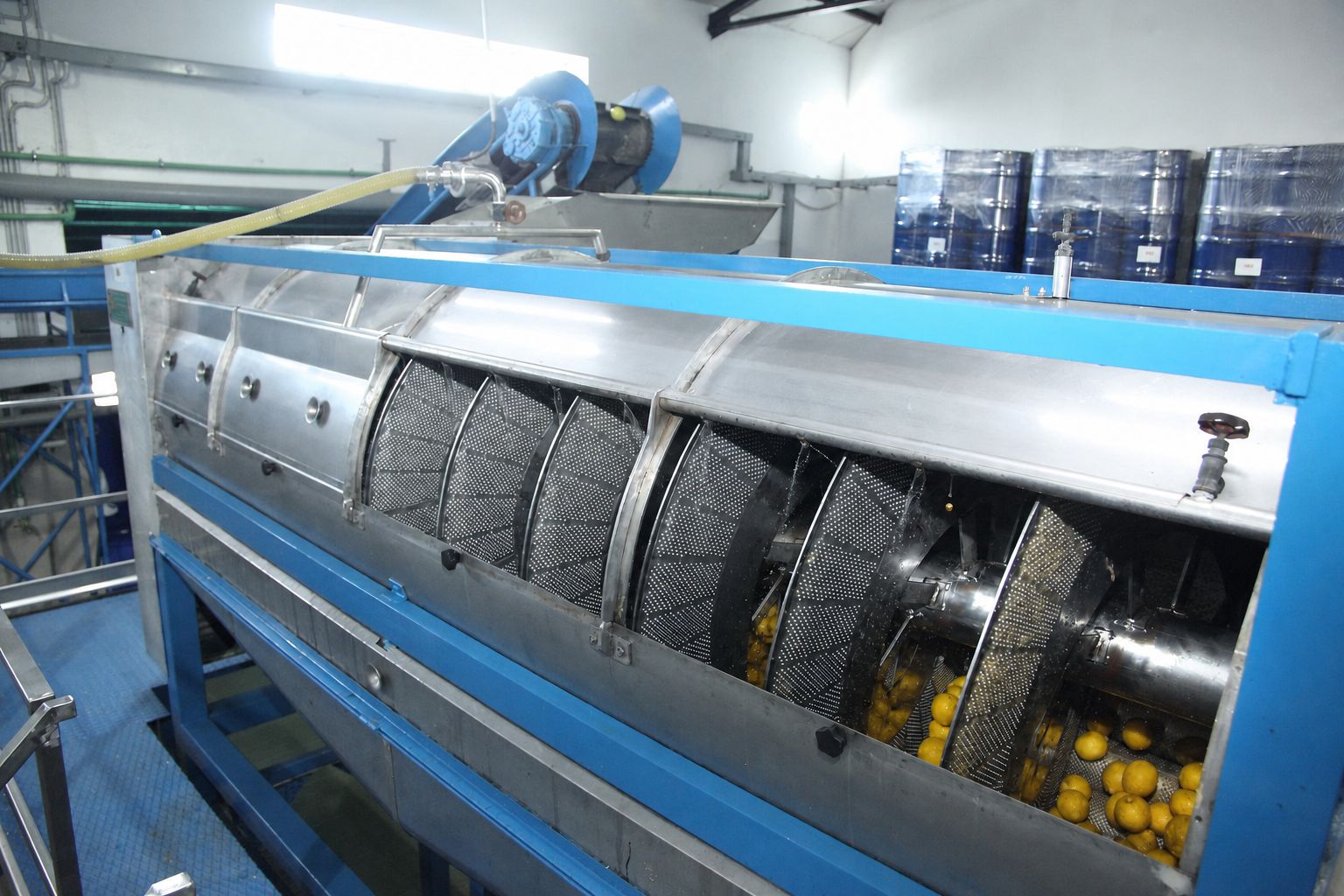
The outer peel is removed to separate juice cells from the skin. The operation is managed to limit waste and keep as much of the edible fruit as possible.
Peel is bitter if it remains in the juice stream, and it is also the source of cold-pressed essential oil.
Stage 4
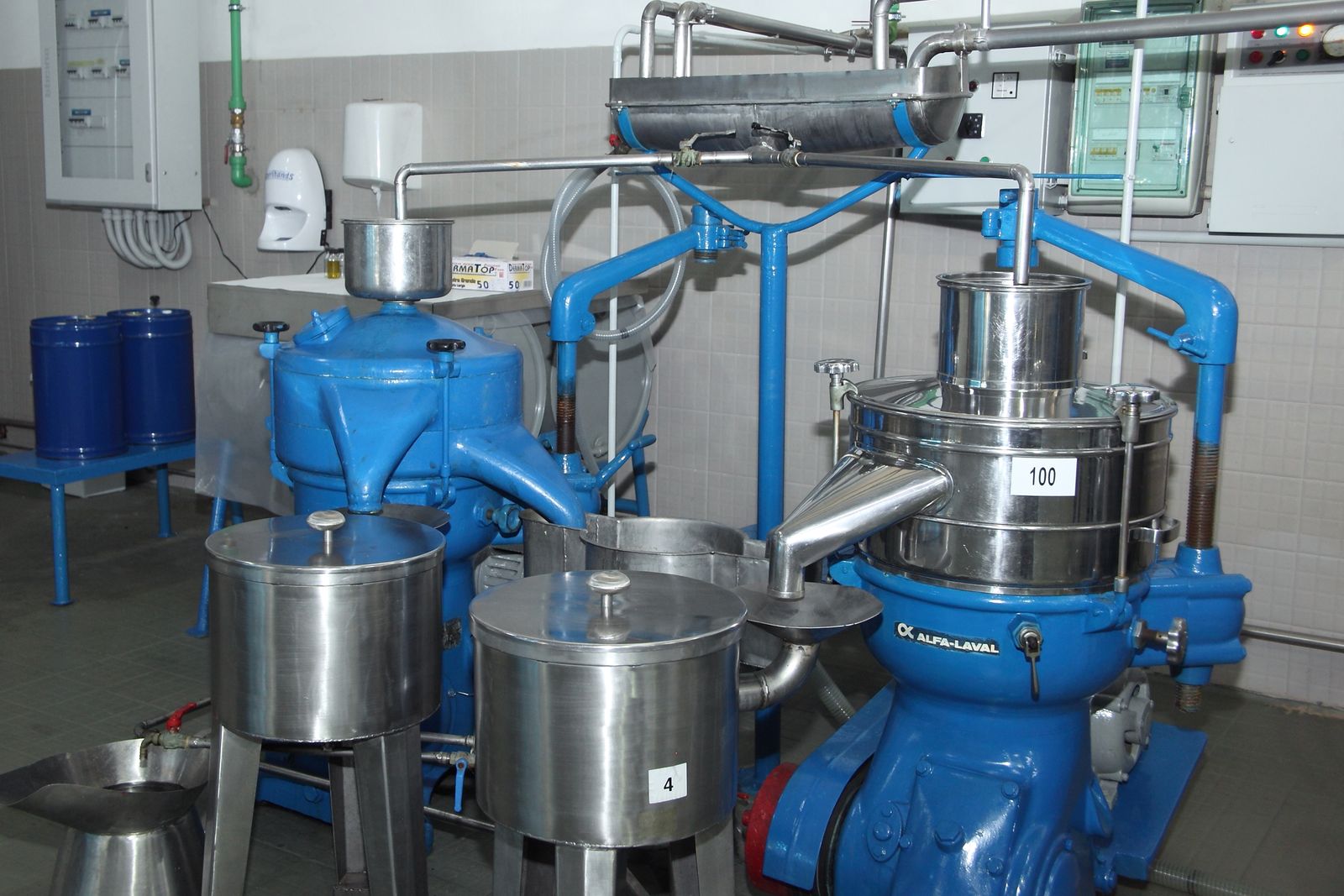
Peel oils are recovered on Alfa Laval extracting centrifuges and packed into iron drums. Cold mechanical extraction preserves the oil’s natural aroma without heat.
This parallel stream turns peel into a high-value ingredient for flavour, fragrance, and specialised applications.
Stage 5
Peeled fruit is cut and pressed to release the juice that will continue along the selected cloudy or clear line.
Gentle, complete extraction captures flavour, colour, and yield before any refining or heat treatment.
Stage 6
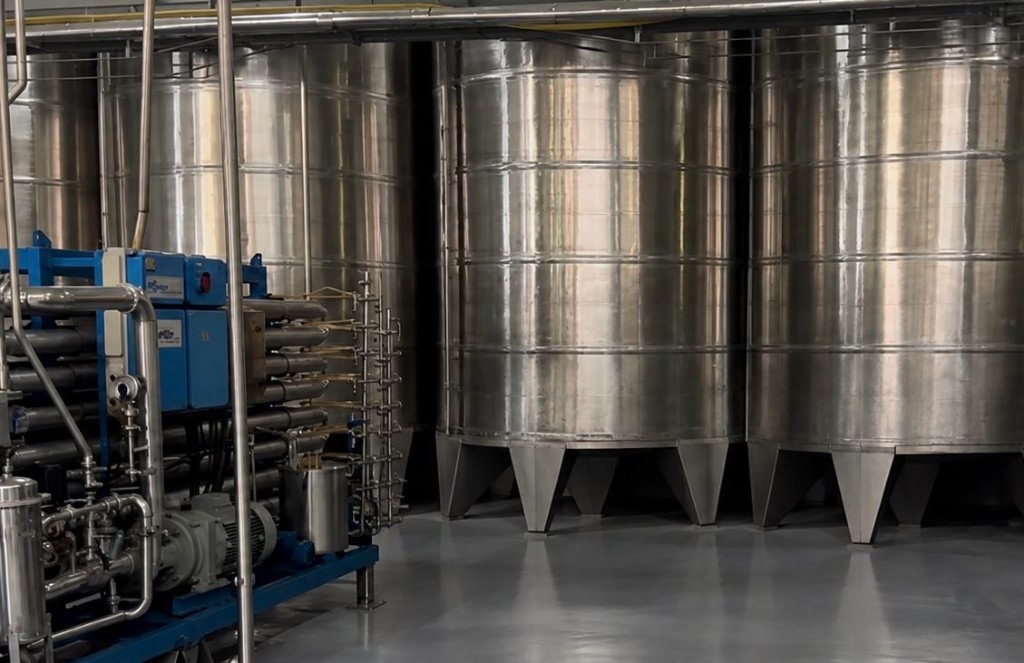
Freshly pressed juice is held in bulk tanks while it is sampled and prepared for the next stage.
Buffer storage lets the laboratory check the juice and keeps a steady feed to filtration or pasteurisation.
Stage 7
Juice is pasteurised before it enters the vacuum pulp filter.
An earlier heat step stabilises the juice and protects quality ahead of clarification.
Stage 8
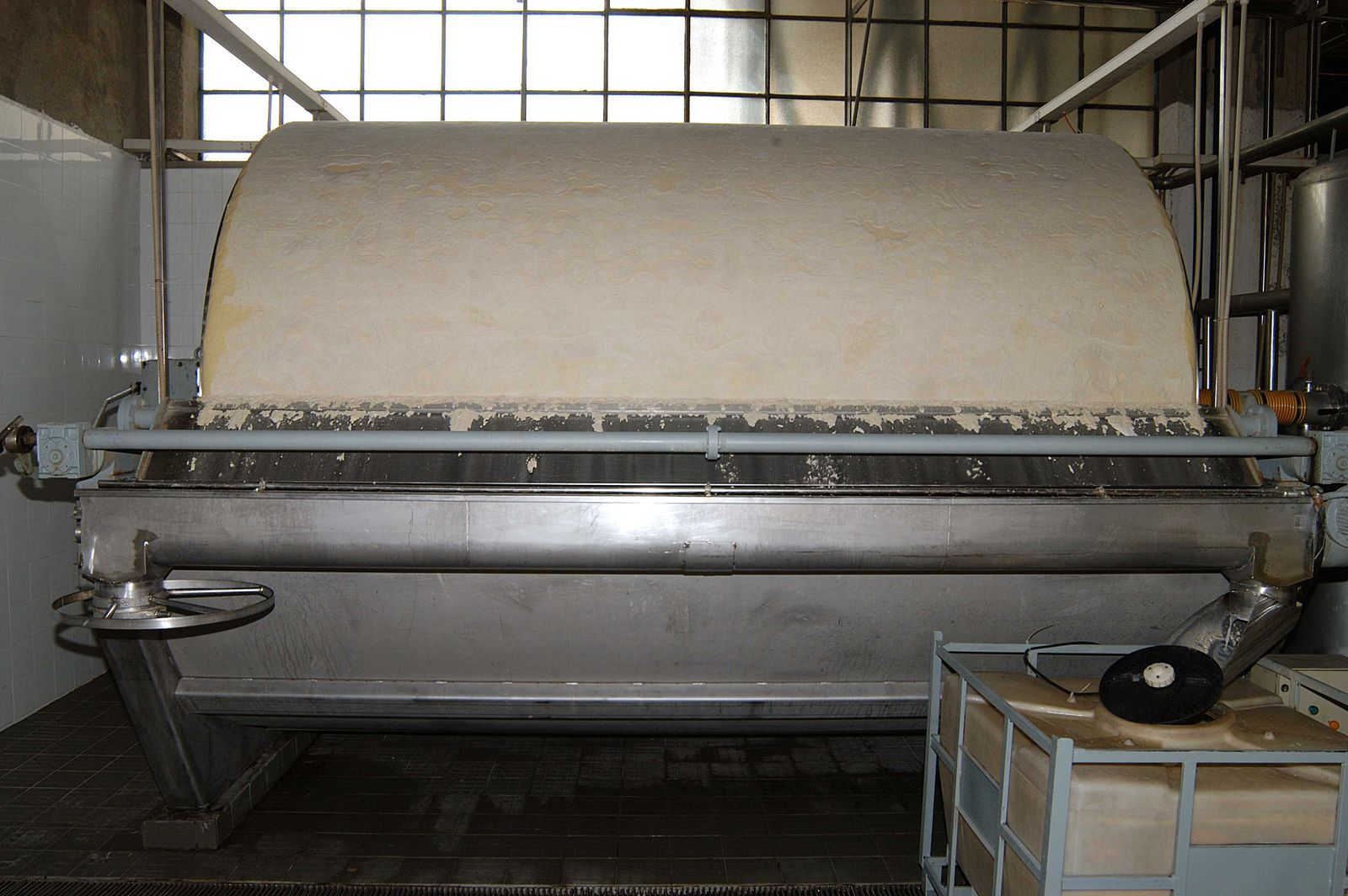
A Padovan vacuum pulp-filter clarifies the juice, retaining about 70% as clear juice and cutting off around 30% pulp.
This is the first dedicated clarifying step on the crystal-clear line, removing coarse pulp before ultrafiltration.
Stage 9
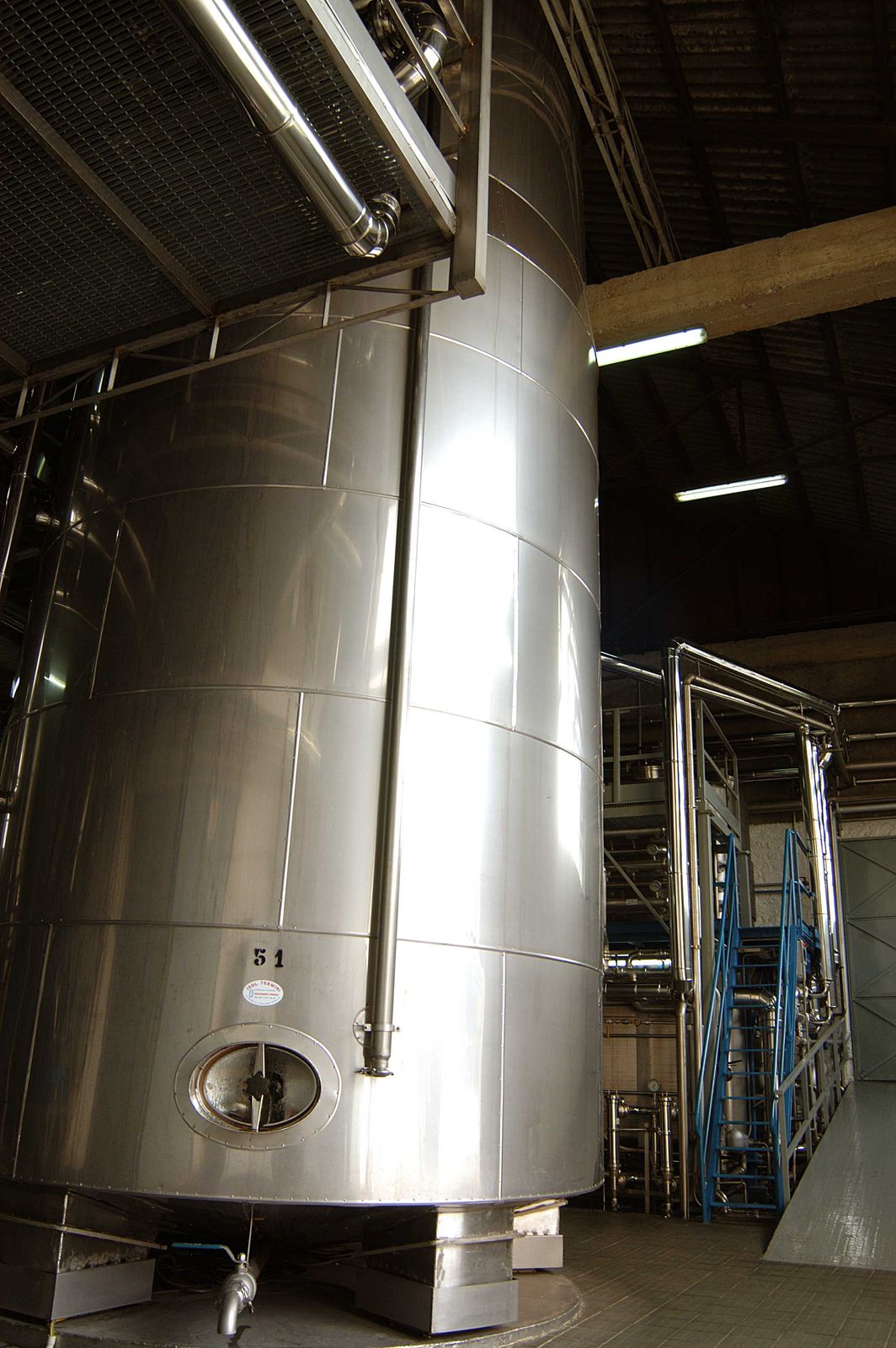
After the first clarification or heat treatment, juice is held in tanks of about 600,000 litres (600 tons) under laboratory control.
Intermediate holding stabilises the flow to the next precision stage and gives time for quality checks.
Stage 10
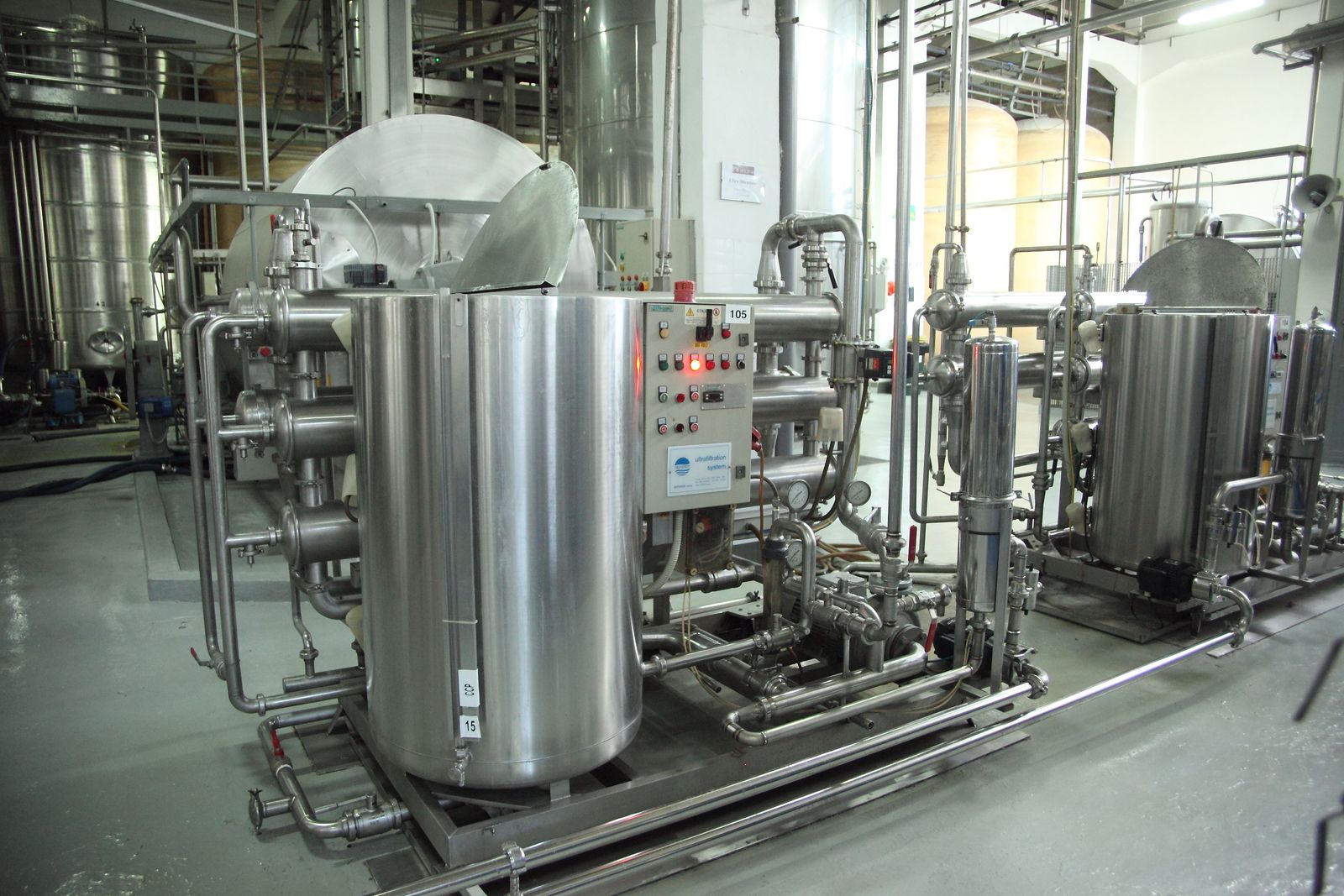
Ultrafiltration plants filter the juice.
Membrane filtration removes fine haze and microscopic particles, producing the crystal-clear juice that defines this path.
Stage 11
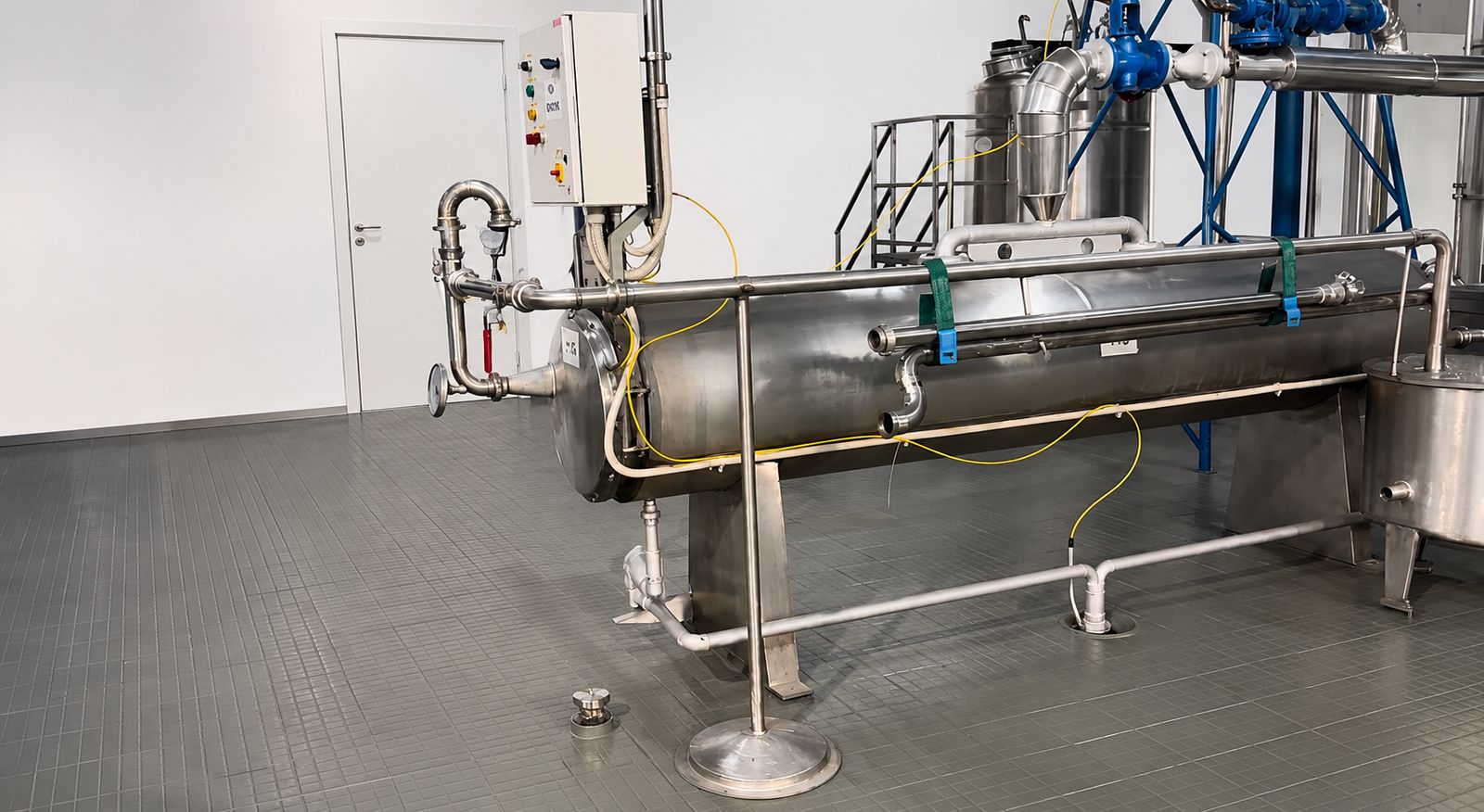
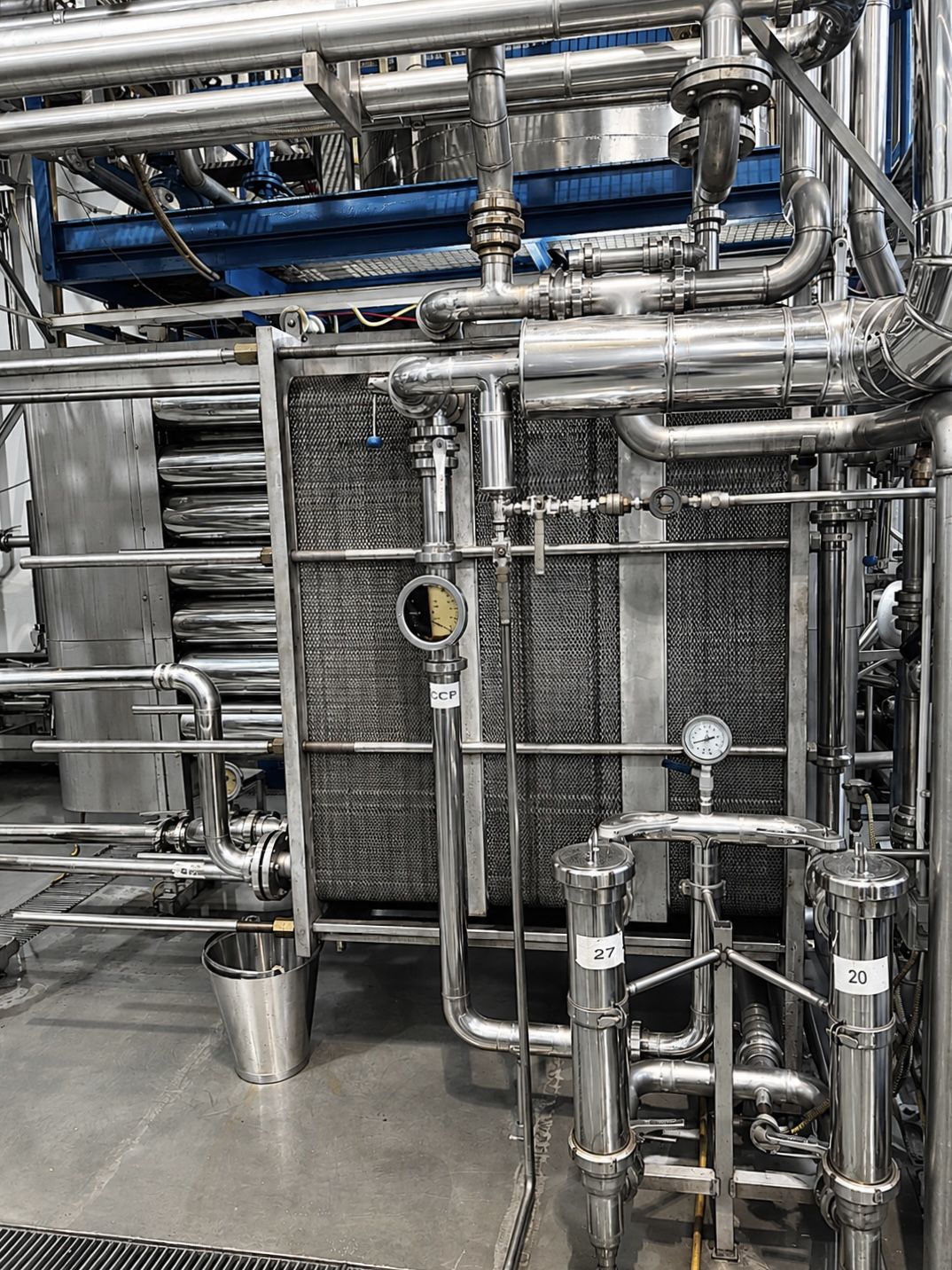
Juice is pasteurised at 90°C to inactivate enzymes and reduce microbial load before chilled storage and filling.
Controlled heat treatment protects flavour while securing microbiological stability for filling or further processing.
Stage 12
Finished juice is held in chilled tanks at low temperature.
Cold bulk storage preserves freshness until the filling department draws product for packing.
Stage 13
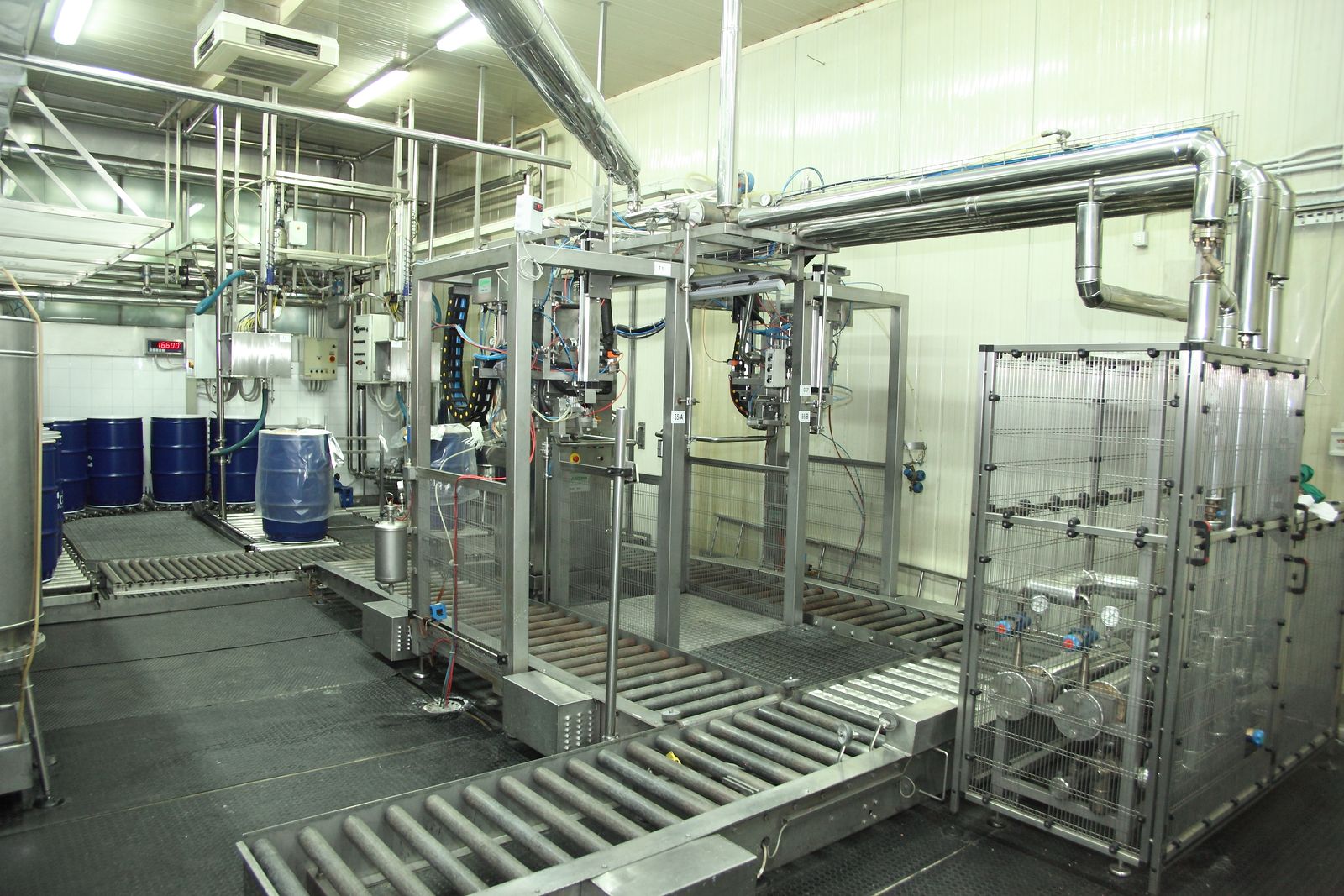
The filling department uses four tanks. Juice is packed on an automatic filling system, with a final 90°C pasteurisation where the specification requires it. Pre-shipping samples go to the laboratory.
Hygienic filling into drums and tanks protects the product for customers in industry and HoReCa.
Stage 14
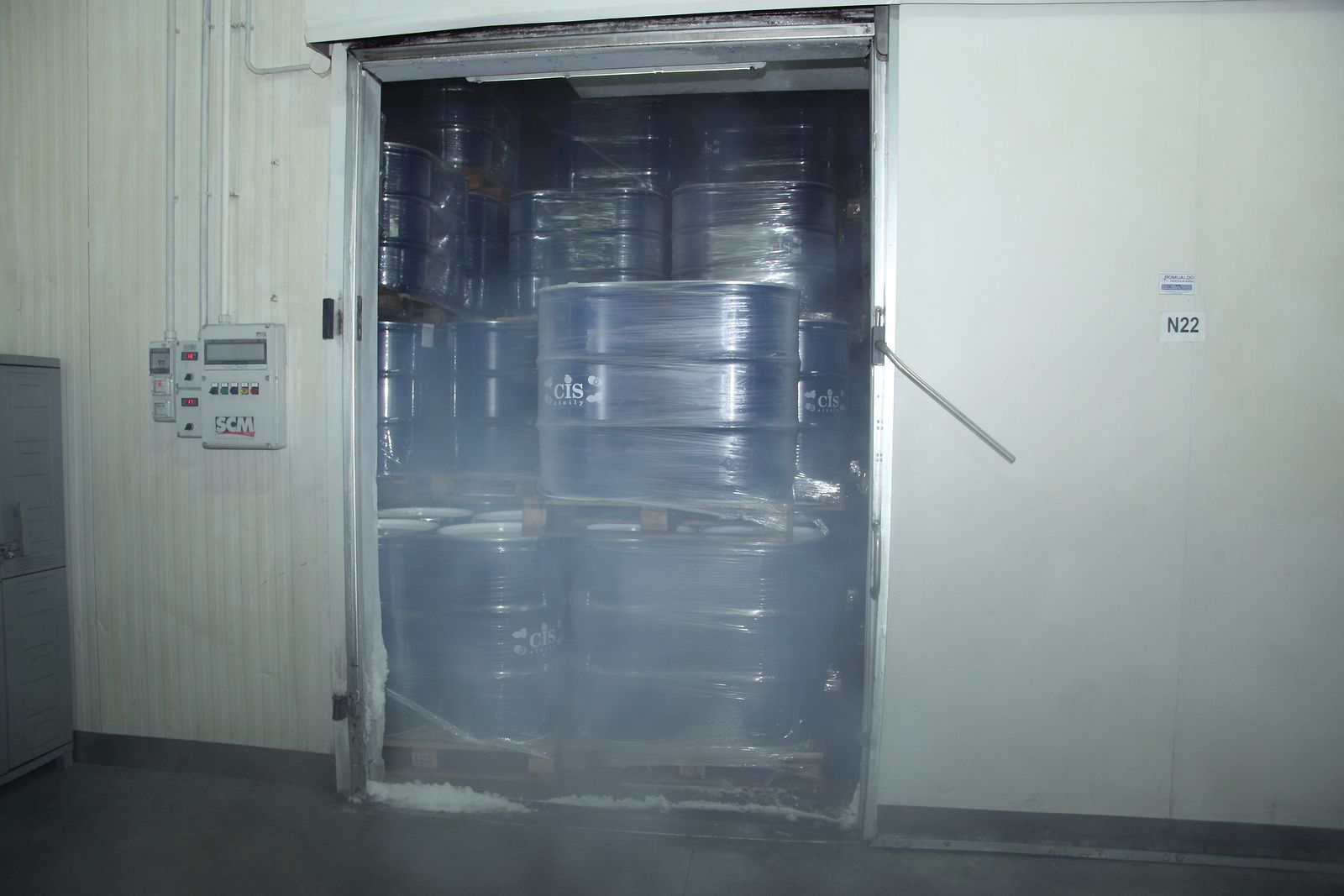
Packed product is moved to the cool room and frozen chambers, holding drums at low temperature until shipment.
Cold storage extends shelf life without preservatives and keeps flavour stable until export.
Stage 15
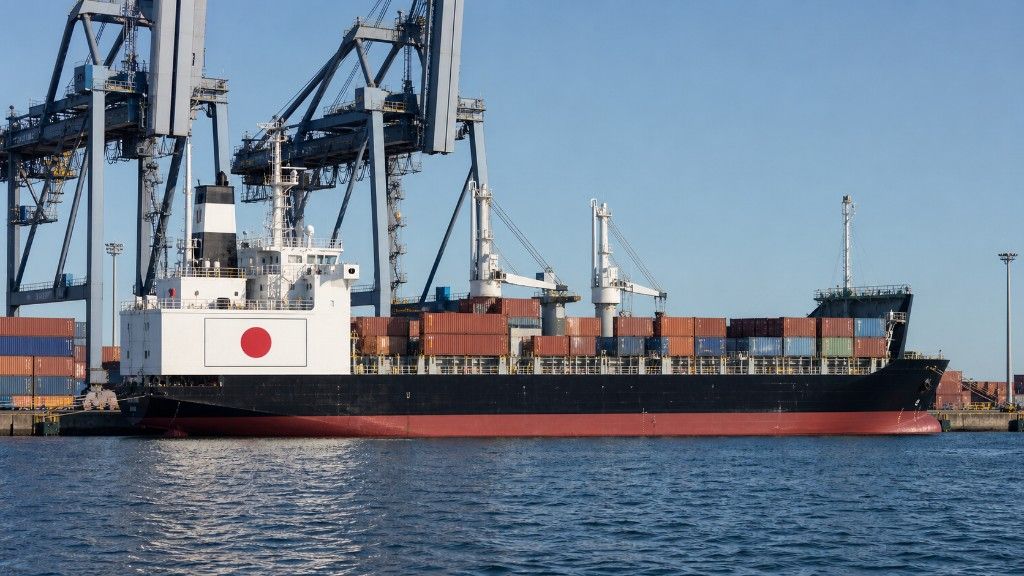
Finished juices and concentrates leave Messina by road and sea to customers across Europe, Asia, the Middle East, and beyond.
The factory is organised so that laboratory-released lots move promptly from the cool room into export logistics.
Stage 1
The fruit arrives at the Messina factory and is received under controlled conditions before it enters the line.
Starting with sound, fully traceable fruit is the foundation of juice quality, aroma, and food safety.
Stage 2
Fruit is conveyed through a washing stage that removes soil, dust, and surface residues in a controlled water bath before peeling.
A clean fruit surface protects downstream equipment and keeps peel oils and juice free from external contamination.
Stage 3
The outer peel is removed to separate juice cells from the skin. The operation is managed to limit waste and keep as much of the edible fruit as possible.
Peel is bitter if it remains in the juice stream, and it is also the source of cold-pressed essential oil.
Stage 4
Peel oils are recovered on Alfa Laval extracting centrifuges and packed into iron drums. Cold mechanical extraction preserves the oil’s natural aroma without heat.
This parallel stream turns peel into a high-value ingredient for flavour, fragrance, and specialised applications.
Stage 5
Peeled fruit is cut and pressed to release the juice that will continue along the selected cloudy or clear line.
Gentle, complete extraction captures flavour, colour, and yield before any refining or heat treatment.
Stage 6
Freshly pressed juice is held in bulk tanks while it is sampled and prepared for the next stage.
Buffer storage lets the laboratory check the juice and keeps a steady feed to filtration or pasteurisation.
Stage 7
Juice is pasteurised before it enters the vacuum pulp filter.
An earlier heat step stabilises the juice and protects quality ahead of clarification.
Stage 8
A Padovan vacuum pulp-filter clarifies the juice, retaining about 70% as clear juice and cutting off around 30% pulp.
This is the first dedicated clarifying step on the crystal-clear line, removing coarse pulp before ultrafiltration.
Stage 9
After the first clarification or heat treatment, juice is held in tanks of about 600,000 litres (600 tons) under laboratory control.
Intermediate holding stabilises the flow to the next precision stage and gives time for quality checks.
Stage 10
Ultrafiltration plants filter the juice.
Membrane filtration removes fine haze and microscopic particles, producing the crystal-clear juice that defines this path.
Stage 11
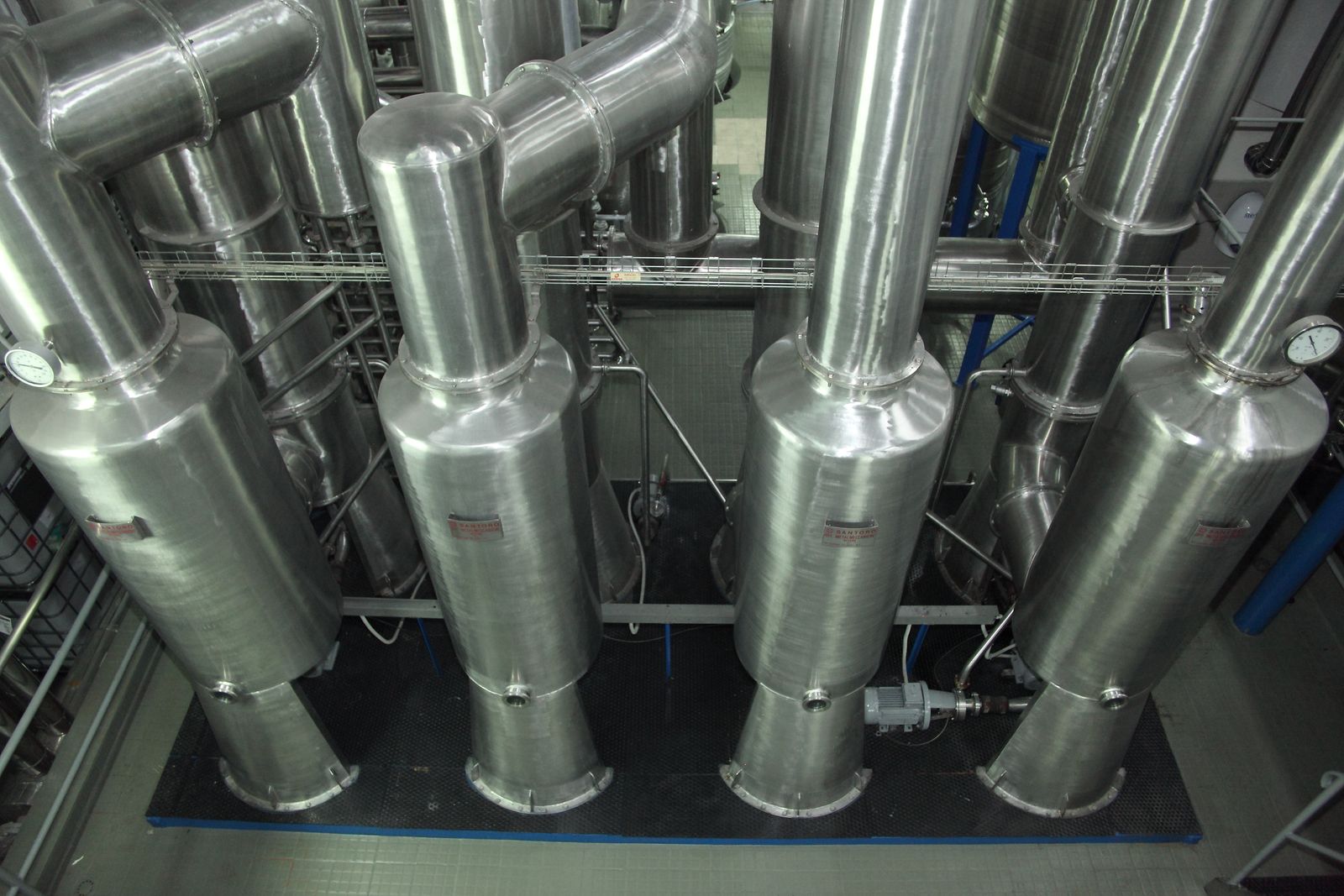
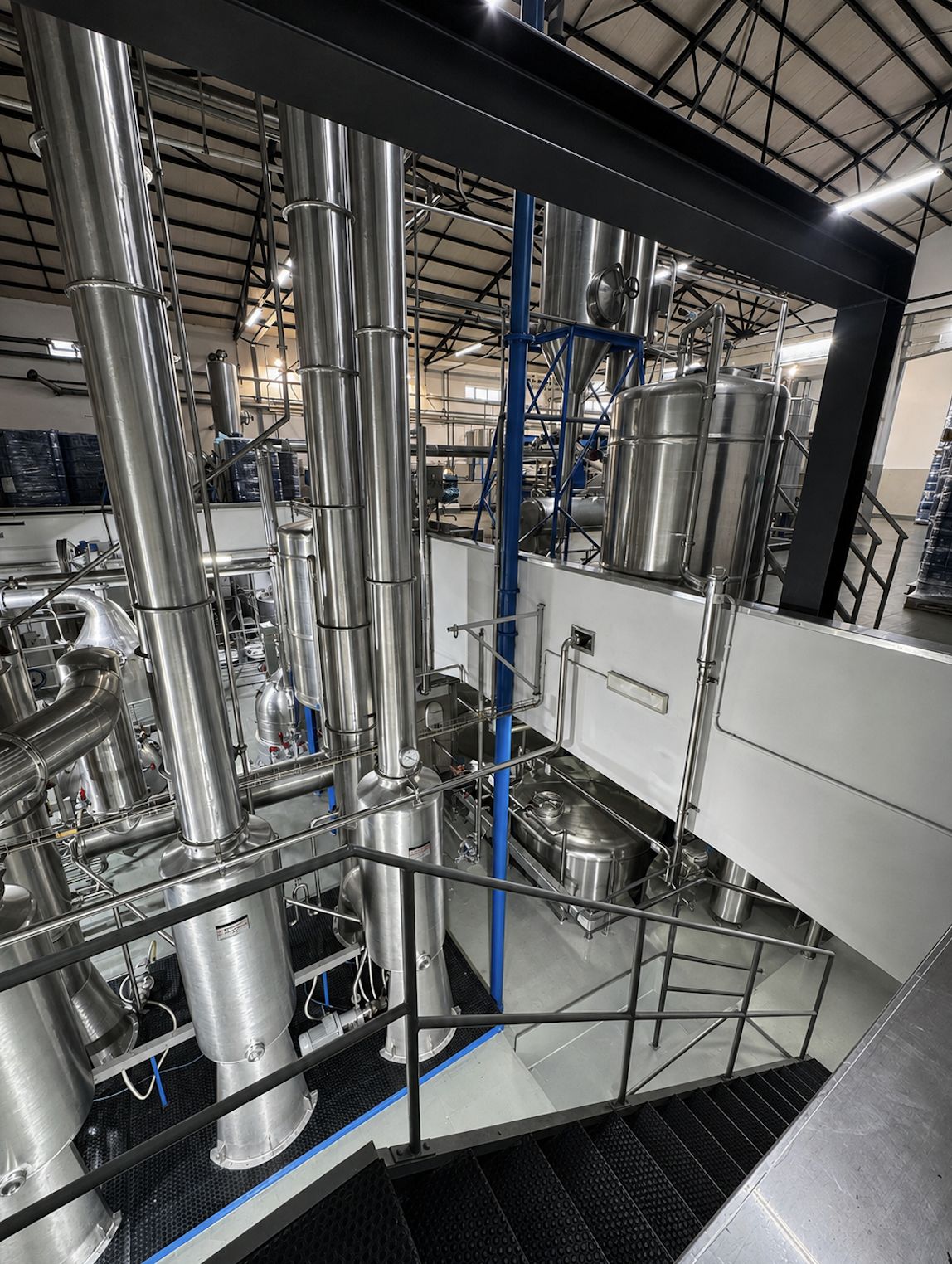
Two large Santoro Sicily plants concentrate the juice on a five-stage falling-film condenser. Each stage reduces water content at low temperature.
Multi-stage vacuum concentration intensifies flavour and cuts volume, making transport and storage more efficient without harsh heat.
Stage 12
Immediately after concentration, the product is flash-cooled to lock in aroma and stop further thermal change.
Rapid cooling after evaporation preserves the fresh citrus profile built up in the five-stage condenser.
Stage 13
Juice is pasteurised at 90°C to inactivate enzymes and reduce microbial load before chilled storage and filling.
Controlled heat treatment protects flavour while securing microbiological stability for filling or further processing.
Stage 14
Finished juice is held in chilled tanks at low temperature.
Cold bulk storage preserves freshness until the filling department draws product for packing.
Stage 15
The filling department uses four tanks. Juice is packed on an automatic filling system, with a final 90°C pasteurisation where the specification requires it. Pre-shipping samples go to the laboratory.
Hygienic filling into drums and tanks protects the product for customers in industry and HoReCa.
Stage 16
Packed product is moved to the cool room and frozen chambers, holding drums at low temperature until shipment.
Cold storage extends shelf life without preservatives and keeps flavour stable until export.
Stage 17
Finished juices and concentrates leave Messina by road and sea to customers across Europe, Asia, the Middle East, and beyond.
The factory is organised so that laboratory-released lots move promptly from the cool room into export logistics.
Stage 1
The fruit arrives at the Messina factory and is received under controlled conditions before it enters the line.
Starting with sound, fully traceable fruit is the foundation of juice quality, aroma, and food safety.
Stage 2
Fruit is conveyed through a washing stage that removes soil, dust, and surface residues in a controlled water bath before peeling.
A clean fruit surface protects downstream equipment and keeps peel oils and juice free from external contamination.
Stage 3
The outer peel is removed to separate juice cells from the skin. The operation is managed to limit waste and keep as much of the edible fruit as possible.
Peel is bitter if it remains in the juice stream, and it is also the source of cold-pressed essential oil.
Stage 4
Peel oils are recovered on Alfa Laval extracting centrifuges and packed into iron drums. Cold mechanical extraction preserves the oil’s natural aroma without heat.
This parallel stream turns peel into a high-value ingredient for flavour, fragrance, and specialised applications.
Stage 5
Peeled fruit is cut and pressed to release the juice that will continue along the selected cloudy or clear line.
Gentle, complete extraction captures flavour, colour, and yield before any refining or heat treatment.
Stage 6
Freshly pressed juice is held in bulk tanks while it is sampled and prepared for the next stage.
Buffer storage lets the laboratory check the juice and keeps a steady feed to filtration or pasteurisation.
Stage 7
On the cloudy line, juice is pasteurised on Santoro equipment shortly after pressing, before centrifugation.
An earlier heat step stabilises cloudy juice and protects its natural body ahead of centrifugal refining.
Stage 8
After the first clarification or heat treatment, juice is held in tanks of about 600,000 litres (600 tons) under laboratory control.
Intermediate holding stabilises the flow to the next precision stage and gives time for quality checks.
Stage 9
Centrifuges refine cloudy juice, reducing pulp while keeping the characteristic cloud.
Centrifugation replaces vacuum and ultrafiltration on the cloudy path, so the juice stays naturally hazy rather than crystal clear.
Stage 10
Juice is pasteurised at 90°C to inactivate enzymes and reduce microbial load before chilled storage and filling.
Controlled heat treatment protects flavour while securing microbiological stability for filling or further processing.
Stage 11
Finished juice is held in chilled tanks at low temperature.
Cold bulk storage preserves freshness until the filling department draws product for packing.
Stage 12
The filling department uses four tanks. Juice is packed on an automatic filling system, with a final 90°C pasteurisation where the specification requires it. Pre-shipping samples go to the laboratory.
Hygienic filling into drums and tanks protects the product for customers in industry and HoReCa.
Stage 13
Packed product is moved to the cool room and frozen chambers, holding drums at low temperature until shipment.
Cold storage extends shelf life without preservatives and keeps flavour stable until export.
Stage 14
Finished juices and concentrates leave Messina by road and sea to customers across Europe, Asia, the Middle East, and beyond.
The factory is organised so that laboratory-released lots move promptly from the cool room into export logistics.
Stage 1
The fruit arrives at the Messina factory and is received under controlled conditions before it enters the line.
Starting with sound, fully traceable fruit is the foundation of juice quality, aroma, and food safety.
Stage 2
Fruit is conveyed through a washing stage that removes soil, dust, and surface residues in a controlled water bath before peeling.
A clean fruit surface protects downstream equipment and keeps peel oils and juice free from external contamination.
Stage 3
The outer peel is removed to separate juice cells from the skin. The operation is managed to limit waste and keep as much of the edible fruit as possible.
Peel is bitter if it remains in the juice stream, and it is also the source of cold-pressed essential oil.
Stage 4
Peel oils are recovered on Alfa Laval extracting centrifuges and packed into iron drums. Cold mechanical extraction preserves the oil’s natural aroma without heat.
This parallel stream turns peel into a high-value ingredient for flavour, fragrance, and specialised applications.
Stage 5
Peeled fruit is cut and pressed to release the juice that will continue along the selected cloudy or clear line.
Gentle, complete extraction captures flavour, colour, and yield before any refining or heat treatment.
Stage 6
Freshly pressed juice is held in bulk tanks while it is sampled and prepared for the next stage.
Buffer storage lets the laboratory check the juice and keeps a steady feed to filtration or pasteurisation.
Stage 7
On the cloudy line, juice is pasteurised on Santoro equipment shortly after pressing, before centrifugation.
An earlier heat step stabilises cloudy juice and protects its natural body ahead of centrifugal refining.
Stage 8
After the first clarification or heat treatment, juice is held in tanks of about 600,000 litres (600 tons) under laboratory control.
Intermediate holding stabilises the flow to the next precision stage and gives time for quality checks.
Stage 9
Centrifuges refine cloudy juice, reducing pulp while keeping the characteristic cloud.
Centrifugation replaces vacuum and ultrafiltration on the cloudy path, so the juice stays naturally hazy rather than crystal clear.
Stage 10
Two large Santoro Sicily plants concentrate the juice on a five-stage falling-film condenser. Each stage reduces water content at low temperature.
Multi-stage vacuum concentration intensifies flavour and cuts volume, making transport and storage more efficient without harsh heat.
Stage 11
Immediately after concentration, the product is flash-cooled to lock in aroma and stop further thermal change.
Rapid cooling after evaporation preserves the fresh citrus profile built up in the five-stage condenser.
Stage 12
Juice is pasteurised at 90°C to inactivate enzymes and reduce microbial load before chilled storage and filling.
Controlled heat treatment protects flavour while securing microbiological stability for filling or further processing.
Stage 13
Finished juice is held in chilled tanks at low temperature.
Cold bulk storage preserves freshness until the filling department draws product for packing.
Stage 14
The filling department uses four tanks. Juice is packed on an automatic filling system, with a final 90°C pasteurisation where the specification requires it. Pre-shipping samples go to the laboratory.
Hygienic filling into drums and tanks protects the product for customers in industry and HoReCa.
Stage 15
Packed product is moved to the cool room and frozen chambers, holding drums at low temperature until shipment.
Cold storage extends shelf life without preservatives and keeps flavour stable until export.
Stage 16
Finished juices and concentrates leave Messina by road and sea to customers across Europe, Asia, the Middle East, and beyond.
The factory is organised so that laboratory-released lots move promptly from the cool room into export logistics.